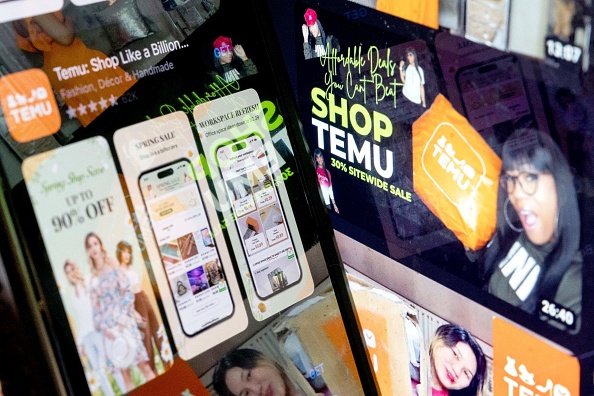
Over the last few weeks, I have been thinking about the battle between Amazon and Temu in multiple e-commerce markets. Who is winning, and when will this end? This will not end like Wish, as Temu has access to much more capital than Wish ever had. The question should be, how does this battle between two horizontal marketplaces end?
In multiple markets, such as South Korea and China, consumer-to-manufacturer (C2M) marketplaces take market share away from dominant horizontal marketplaces. What is this all about? Which horizontal marketplace can offer Chinese factories/manufacturers access to consumers who want to purchase their goods?
When I started in e-commerce the algorithm was akin to a secret. It was immovable nor helpful but eas needed to be respected as it could hurt businesses.
Over the last 18 months, it has become clear that we are at the beginning of the end for the algorithm. Regulators are no longer satisfied with companies negatively impacting businesses, sellers, or customers. Self-regulation failed as platforms could grow revenues through the use of an algorithm without oversight, nor were there any consequences for anomalies that benefited one side of the platform partnerships.
Increasingly, European regulators are asking platforms and marketplaces for data and explanations of recommendation services or their algorithms that determine search results. What data is being used to calculate the location of listings (never mind relevance or accuracy), or how are recommendations being developed to drive additional consumer purchases? As artificial intelligence gains momentum and usage by platforms to drive personalization across various parts of the web, e-commerce, as we know, is likely ending. Bias, inaccuracy, and irrelevance can negatively impact platforms, consumers, and brands. Regulators want transparency to offer a level environment as competition intensifies in all e-commerce markets.
Amazon has had Chinese cross-border marketplaces such as Shein and Temu in their periphery more than what they will admit to. Chief Executive Officer Andy Jassy indirectly mentioned the companies when he referred to “cost to serve” in his annual shareholder letter. Amazon adding a dedicated discount store on its marketplace for Chinese goods that are cheaper and shipped at slower speeds enable them to play both offence and defence to competitors.
A decade ago, no marketplace would think about launching in the US, Germany, UK and emerging markets such as Brazil as in all cases a market leader exists. The four Chinese Dragons – Shein, Temu, TikTok Shop, and AliExpress are all connecting customers to Chinese manufacturers who have factories that are idle and are in need of orders to drive revenues and be able to pay salaries to staff. Cross-border e-commerce has evolved from being a niche to a direct competitor to marketplaces in global markets in offering customers access to cheap goods made in China shipped in days instead of hours to consumers.
Over the last year, I have been tracking a story that has implications for the entire e-commerce sector (brands, vendors, agencies, and customers). Google’s relationship with one of its largest advertisers, Amazon, is strained, to say the least. What is Google’s north star, and how does it impact e-commerce platforms? Amazon spends millions to ensure customers can find whatever they need, yet it is clearly concerned over Google’s future ambitions. What is the end game for Google and Amazon?
Google and Organic Results
Google has one business—selling advertising alongside its search results. For some reason, Google feels that it needs to add artificial intelligence to its search results to help customers. I find that adding AI to its search engine is borderline crazy, as the beta has been diminishing the trust it’s built for years. Do OpenAI and Microsoft really pose such a threat that Google has to add untested technology to a multi-billion dollar business and risk losing customers? Or is this an admission that, internally, the company believes its search business has reached its plateau?
It has been two and a half years since my last newsletter. The e-commerce world increasingly feels equal to dog years – a lot has changed. What are the major learnings I have had.
Learnings A to Z
Amazon is still a misunderstood channel for brands. Yes – you read that right. There are still brands that either are unaware of the channel or are just not interested in selling on the marketplace. A decade ago, I was one of those idiot consultants who thought that brands should not be on the channel. Really? Over the last two and half years – the numerous times I saw Amazon being the largest and fastest-growing channel for brands. Consumer packaged goods believe that the deck is so stacked against them that Amazon is not worth the effort. Really? What are we doing here?
To provide the best experiences, we use technologies like cookies to store and/or access device information. Consenting to these technologies will allow us to process data such as browsing behavior or unique IDs on this site. Not consenting or withdrawing consent, may adversely affect certain features and functions.
Functional
Always active
The technical storage or access is strictly necessary for the legitimate purpose of enabling the use of a specific service explicitly requested by the subscriber or user, or for the sole purpose of carrying out the transmission of a communication over an electronic communications network.
Preferences
The technical storage or access is necessary for the legitimate purpose of storing preferences that are not requested by the subscriber or user.
Statistics
The technical storage or access that is used exclusively for statistical purposes.The technical storage or access that is used exclusively for anonymous statistical purposes. Without a subpoena, voluntary compliance on the part of your Internet Service Provider, or additional records from a third party, information stored or retrieved for this purpose alone cannot usually be used to identify you.
Marketing
The technical storage or access is required to create user profiles to send advertising, or to track the user on a website or across several websites for similar marketing purposes.