I find that entrepreneurs and venture capital investment in developed and emerging markets are cyclical. Either entrepreneurs are seeing opportunities in the West and bringing them to emerging markets, or vice versa. If you asked me five years ago whether quick commerce would become competitive in India and China, I would have told you no way.
In Europe and the US markets, the quick commerce storm has calmed down as funding stopped for platforms and regulators placed demands on these platforms. To be clear, quick commerce and restaurant deliery platform are not similar but rather two different platforms. In Europe, it was a war between Gopuff, Getir, Delivery Hero, Gorillas, and Flink.
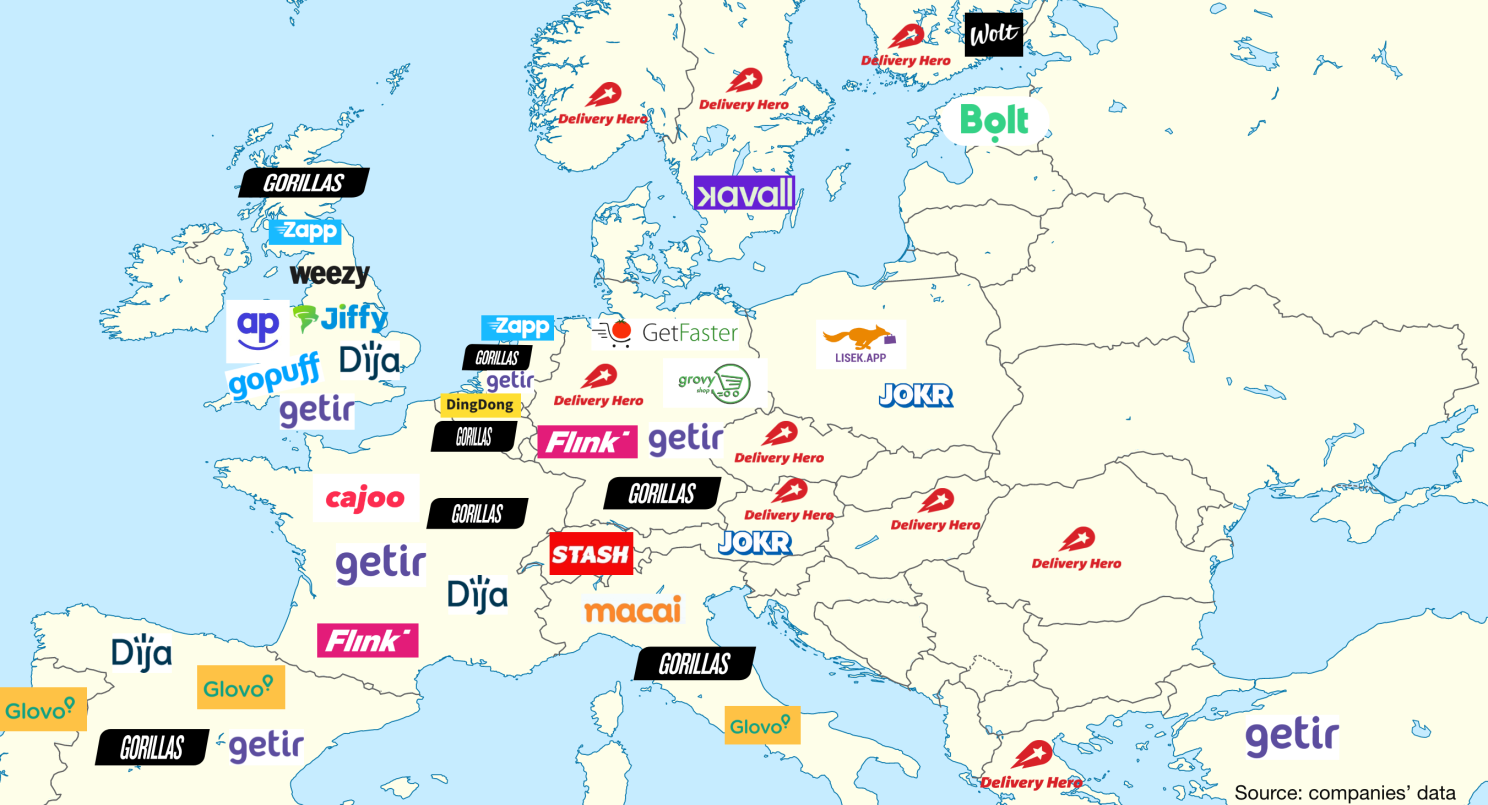
Source: LinkedIn
Why Did Quick Commerce Companies Fail in Europe and the US?
In one word – blitzscaling and secondly retail. Blitzscaling is a startup strategy
Blitzscaling is a rapid and aggressive business growth strategy that prioritizes speed and market dominance over efficiency and short-term profitability. It's essentially about scaling a company at lightning speed, often in uncertain environments, to establish a dominant market position before competitors can catch up.
Most if not all of these platforms raised significant venture capital and in cases was using it to subsidize customer acquisition. Secondly, they struggled to find cities that were dense enough that would generate enough daily sales without the need for aggressive marketing and advertising investment.
The other reason which I wrote about for Hngry in 2022 was a lack of understanding of new markets. Local teams were seldomly found and businesses were run from markets which have different consumer behaviour, Why did these companies think that markets are similar – arrogance I believe and a lack of understanding of the impact of retail.
Every country in the world has retailers that have spent and invested heavily in having the correct product mix for local consumers but also being close enough to those customers without the need for delivery fees to those same consumers. These same retailers also have long term whole sale relationships with vendors who supply them with products that consumers want.
One major miscalculation these entrepreneurs also made was a lack of understanding that retail is a sector with low margins. Quick commerce works when a retailer can use its stores as warehouses and be able to deliver to an area of 5-8 miles around the shops location.
I will add that some of these companies also did not follow local laws regarding locations of dark stores or hiring of local delivery staff. In Europe especially this lead to local regulators coming down hard on the entire sector rather than on a specific company,
I thought that Gopuff would win in the US due to them being closer to profitability and having raised significantly more capital than competitors. As of writing the company is operational in the US and in the UK.
The belief at the time was that these platforms would need to offer advertising services to grow their margins but also find alternative solutions to create revenues from facilities and technology it has invested in.
The Emerging Markets Are Competitive
In 2025, the heavyweights in Chinese e-commerce such as Alibaba, JD.com, and Meituan, are battling through the use of subsidies. Over 200 million orders were received by these platforms were offering discounts to customers on a Sunday.
So it’s a great time to be a consumer in China, but it’s a bad time to own a restaurant or sell groceries as no or low margins are the order of the day.
In India, Flipkart and Amazon are battling Blinkit, Zepto,Swiggy and various sector specific quick commerce companies. We have started seeing platform fees being charged as profitability has not yet been seen by any quick commerce platform.
How Checkers Sixty60 Won In South Africa
I have worked in e-commerce long enough to remember a time when the Shoprite Checkers group was not remotely interested in e-commerce in South Africa. That all changed when the pandemic hit the world and consumers were unable to go to stores and home delivery was a survival tool for retailers globally.
Checkers Sixty60 by my calculations is a trojan horse for a retailer that generates significant revenues quarterly. The Shoprite Checkers group has used a combination of licensing and investment to scale technology to create a dominant solution that offers customers with convenience. They acquired their logistics solution from an entity that did not understand that they had an negotiation opportunity.
The Shoprite Checkers group has leveraged ERP technology to give customers a real time view of available inventory when they purchase goods in a store. Secondly, they have created hardware that enables their in-store staff to find consumer packaged goods in a large store to ensure that deliveries can be made inside a hour post order by a customer.
They have created policies that provide customers with credits when a certain percentage of goods is not in an order nor when the delivery happens after an hour.
Delivery is R30 ($1.70) for small to medium sized goods or R50 ($2.82) for large items that delivered by a branded van. Customers are provided an opportunity to tip the motorcycle driver or van driver post receiving of an order.
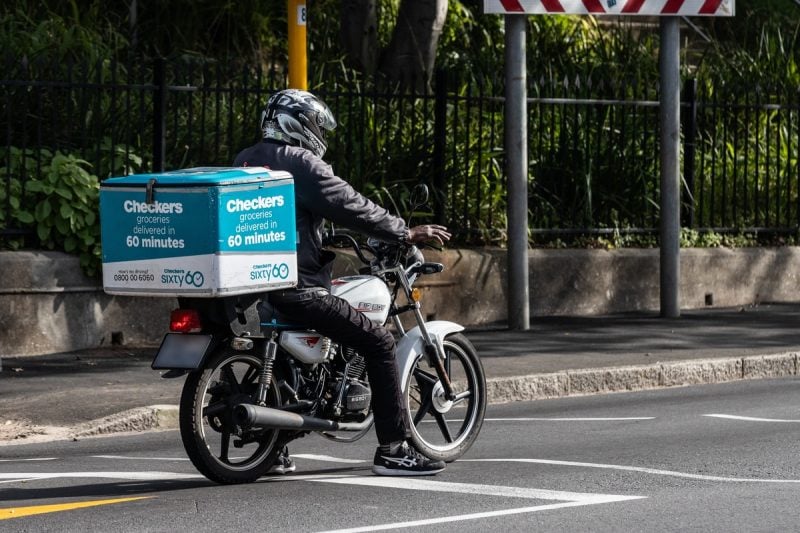
Source: MyBroadband
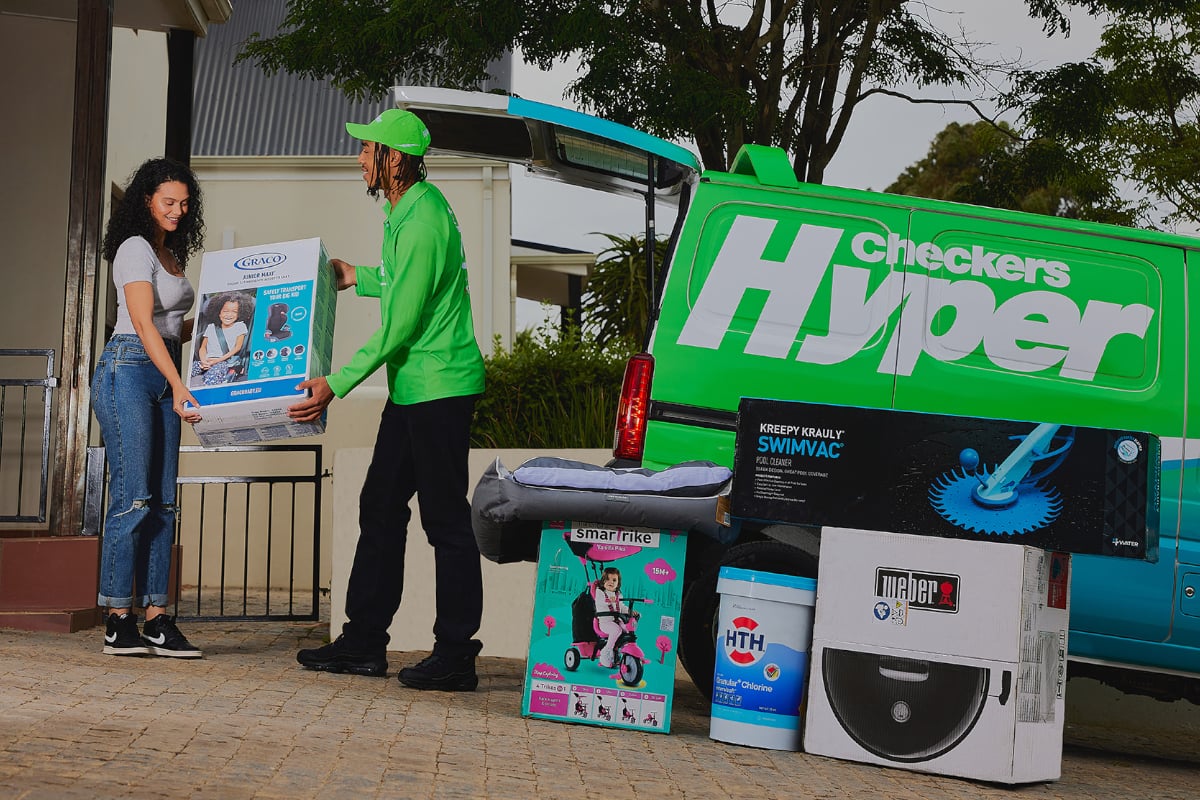
Source: MyBroadband
The Shoprite Checkers Group has leveraged personalization thorough purchase data to offer customers access to personalized deals. The company also offers a subscription called Checkers Xtra Savings Plus in which customers pay R99 ($5.60) per month for free delivery and a discount for instore retail.
The Shoprite Checkers Group has come from being a digital laggard to taking marketshare away from marketplaces such as Takealot and others due to the convenience of their quick commerce solution.
I believe that Checkers Sixty60 drives significant revenue for a retailer that has embraced commerce in a manner that adds to the retail experience. If you are time starved its as easy as opening an app and getting your groceries in 60 minutes or you can go to the store and get a capped discount for being a subscriber to their quick commerce service.
Quick Commerce Macro Thoughts
Consumers want convenience whether they are in a developed and developing market. In markets such as India and China, the retail experience from memory is with the exception of luxury shopping malls not a great one. In situation like this, startups or marketplaces can leverage apps and mobile phones to offer consumers 60 minute delivery.
I will concede that in emerging market lower overhead costs such as staff can provide quick commerce platforms with better margins versus those seen in Europe or the US.
Retail and e-commerce is hard and requires strategy to ensure profitability per order through the use of minimum order amounts. Using subsidies leads to platforms burning through millions of dollars without creating loyal customers. Quick commerce also faces compeition from retailers offering daily slots from grocery collection at a store or the delivery of goods at homes that are done from warehouses and not stores.
I have said for years that South Africa has one of the most developed retail sectors and quick commerce is an extension of it. Startups have struggled against incumbent retailers in South Africa and in markets such as the US and Europe.
The current competition in China is due to JD.com being a laggard and trying to refind their growth by using their core discipline. The challenge is that the sector has a well funded market leader.
The writer owns Shoprite Checkers stock and this is not investment advice.