Category: eCommerce

  • The Silent – those who must not be named in commerce

    2020 is a pivotal year for various sectors in the commerce industry, and post-2020 is uncertain at best. We are at month five of a new world (I despise the new normal references) as commerce continues to evolve to something new, we are still not talking about specific topics. Retail and online trade is sophisticated, and I wish we would talk about certain supposed hard things more. The silence on these topics makes my head spin.

    Source: Fanpop
    (more…)
  • Asymmetrical Information – The case of lemon cars and e-commerce

    According to Investopedia, asymmetrical information or information failure occurs when one party to economic transaction possesses more material knowledge than another party, or they do not have the perfect experience. It typically manifests when the seller possesses greater knowledge than the buyer; however, the reverse dynamic is also possible.

    Asymmetrical information

    A good example of asymmetrical information is the relationship between a seller and a buyer. Whether it is a car salesman, estate agent, or realtor, or a marketplace, specific individuals always have more knowledge about the asset which they are trying to sell to an individual. The unfair advantage is also visible at a macro level on e-commerce as a sector.

    An example of asymmetric information

    Continue Reading

  • The Law of Unintended Consequences

    As 2020 moves forward, I have been thinking about the unintended consequences related to the COVID19 virus. How it will change our lives is currently unclear. The illness has impacted every sector and activity, and unintended consequences are becoming visible globally. The law of unintended consequences is seen as a building block of economics, but it feels relevant to the current situation seen in the world.

    The law of unintended consequences via the impact of regulation and legislation

    Governments have done the right thing to protect citizens, but inadvertently forever changed retail, e-commerce, and commerce.


    Continue Reading

  • How To Control Your Brand In The Age of Amazon – A Must Read for E-commerce Executives

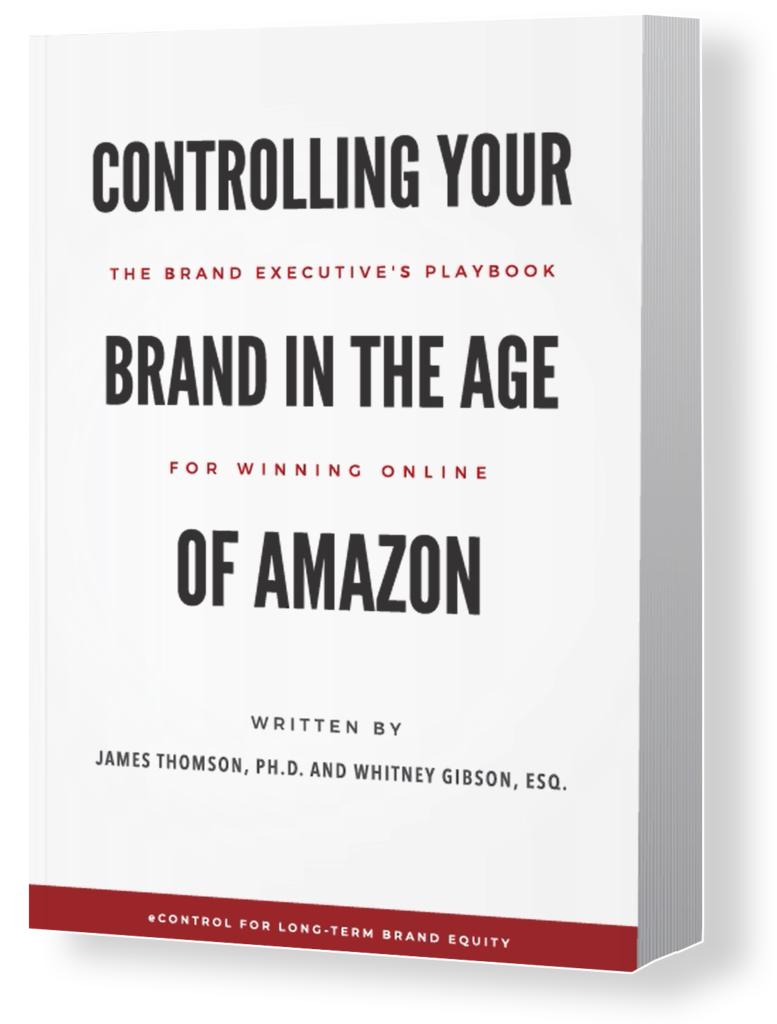
    Controlling your Brand in the Age of Amazon

    At the end of January 2020, I had the opportunity to speak with James Thomson and Whitney Gibson, the authors of a new book Controlling your brand in the Age of Amazon. As Amazon’s dependence on third-party sellers has grown from 3% in 1999 to 58% of Amazon’s retail operation, it becomes critical for brands to control the Amazon channel properly.

    Thomson, the first Fulfillment by Amazon (FBA) account manager and Gibson share actionable strategies for brands to use to gain or regain control over Amazon sales. It is worth noting that the authors deal with brands on a daily basis. Marketplace channel management in their full-time occupations, Thomson on the consulting side as a partner at Buy Box Experts and Gibson as a Partner at Vorys, Sater, Seymour and Pease LLP.  This enables e-commerce executives to leverage expertise gained from helping brands use Amazon as a profitable channel for e-commerce sales.

    Continue Reading

  • The death of pure-ecommerce and the birth of commerce

    Despite the cascade of store closings, liquidations and bankruptcies, there are strong indications that pure-ecommerce, not stores, may be the endangered model. 13D Research This was an article I highlighted in my weekly ecommerce newsletter and this quote from 13D Research has been sticking in my mind. We are in a new phase of commerce in which a combined online and offline strategy will determine who are market leaders. I don’t believe this as being the moment for omnichannel (I despise the word as it is a buzzy concept that could mean a thousand things) but rather the first time in history that commerce is an experience on and offline.

    The dot.com thinking

    Retail has been dead since 1999 according to startup founders and ecommerce investors. Every purchase should have gone through ecommerce and physical retail should have not existed according to these subjective individuals. The simple truth for me is that we are beginning to see the creation of integrated commerce. Amazon, Walmart, Alibaba and JD.com are investing in retail locations as well as their online efforts to grow market share and leave their competitors extended financially and at their mercy.

    Retail is ultimately at a tipping point and their is no turning back. If you are a pure play ecommerce business your customers are going to walk into physical locations of your online competitors. The real story is that we have 4 horseman in 2 large geographies that have large balance sheets we are a point of innovation and change.

    The final indicator of this change was Amazon acquiring Whole Foods Market out right and making it a subsidiary. Jeff Bezos always said that Amazon would open stores when it made sense.


    The simple truth is that we are beginning to see the creation of integrated commerce. Amazon, Walmart, Alibaba and JD.com are investing in retail locations as well as their online efforts to grow market share and leave their competitors extended financially and at their mercy.


    Continue Reading